Last Updated May 2026
Table of Contents
Background
Advance Decarbonization
Strengthen Resilience
Connect Communities
Empower Teams
Govern Responsibly
Introduction
Federal Realty is a recognized leader in the ownership, operation and redevelopment of high-quality retail-based properties located primarily in major coastal markets from Washington, D.C. to Boston as well as San Francisco and Los Angeles. Founded in 1962, Federal Realty’s mission is to deliver long-term, sustainable growth through investing in communities where retail demand exceeds supply. Its expertise includes creating urban, mixed-use neighborhoods like Santana Row in San Jose, California, Pike & Rose in North Bethesda, Maryland and Assembly Row in Somerville, Massachusetts. These unique and vibrant environments that combine shopping, dining, living and working provide a destination experience valued by their respective communities.
Our mission is supported by the sustainability principles that we use to manage all aspects of our investments from concept to execution. We believe that sustainability not only helps us be a better business, but it is our business.
Five Key Pillars to our Sustainability Program
Sustainability Mission Statement: Our mission is to secure our place as leaders in sustainable community-based real estate. Our sustainability mission supports our overall corporate mission and objectives as part of our disciplined approach to investing and operational excellence that leads to better results for all stakeholders.







United Nations Sustainable Development Goals
Federal Realty’s sustainability efforts are guided by the United Nations Sustainable Development Goals (UNSDGs). We have focused our efforts on specific UNSDGs where our business can have the most impact, and our employees advance these goals through the valuable work we do every day.
Alignment of UNSDGs with our sustainability program can be found throughout this policy, and our latest sustainability report.
  |
  |
  |
asdfa sdf sdf |
  |
  |
  |
  |
  |
  |
Our Environmental Management System
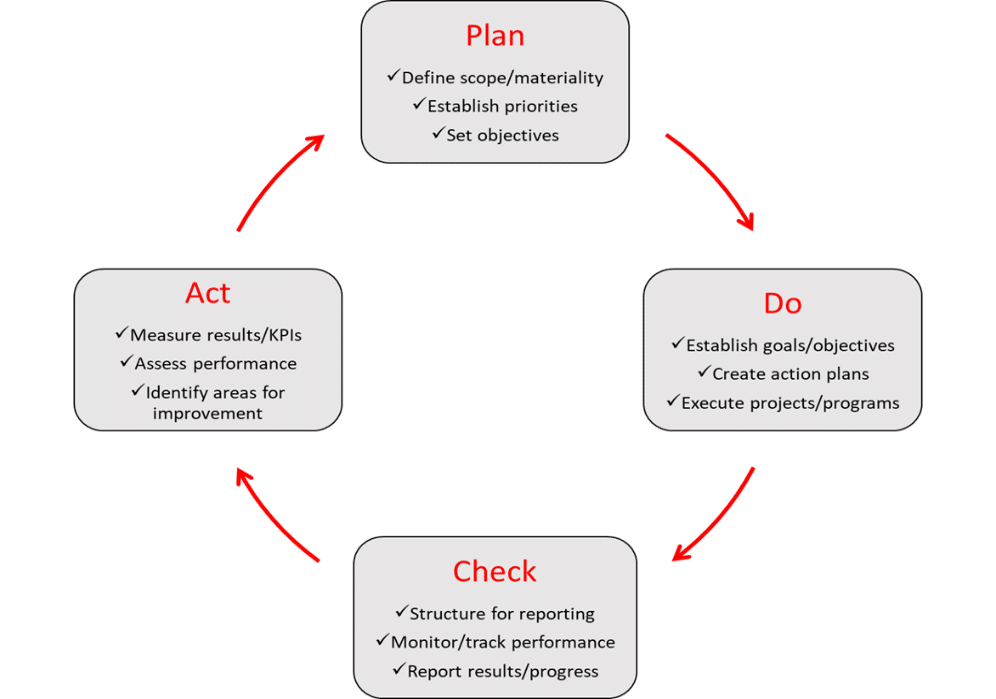
Our program is structured under an environmental management system that is aligned with ISO 14001. This is an iterative process designed for continuous performance improvement with responsibility for execution spread throughout the organization.
Reporting Frameworks
We are committed to providing our stakeholders with information on our sustainability initiatives and progress towards achieving the goals we set. We are committed to responding to these voluntary disclosures, and in alignment with these frameworks on an annual basis, until such time that they are no longer in alignment with our business.
Frameworks that guide our reporting:


Voluntary disclosures we participate in:

Stakeholder Engagement
We engage with all stakeholders, including our supply chain, about sustainability topics on an ongoing basis; at least several times a year. The table below outlines more specific information on our sustainability engagement strategies, which are expanded upon throughout this policy and in our sustainability report and other disclosures.
| Stakeholder Group | Engagement Approach | Topics of Discussion |
| Employees | • One-on-one discussions • Annual engagement surveys • Divisional review of engagement survey results • Employee training through Learn at FRIT program and hands on experience • Quarterly all employee meetings • Formal reporting mechanisms for issues of fraud, harassment, etc • Regular updates on MyFederal, the company intranet • Recognition and reward through the “Find A Better Way” award • Regular health and wellness events | Relevant sustainability related regulations that impact employee job function, corporate sustainability priorities and activities, respect in the workplace, giving and volunteerism, physical and mental wellness, benefits programs, training programs, retirement and financial wellness, and more. |
| Board of Trustees | • Dedicated time and/or materials to sustainability updates at every Board meeting, which happen quarterly, and interim updates and engagement as needed | Physical and transition climate risk exposure, updates on relevant legislation, progress on GHG reduction targets, industry updates, and more. |
| Tenants | • Direct in person interaction between our property teams and tenants; property managers engage with 100% of our tenants each year • Social media posts and interactions • Email and written communication • Green box standards distribution • Tenant manual for construction and design | Energy, emissions, water, waste, materials, building efficiency and potential efficiency improvements, economic performance, property events and initiatives, and more. |
| Shareholders | • One-on-one interactions with individuals and institutions via phone meeting, and/or email • Interaction facilitated via convening industry associations • Information sharing via various disclosures including sustainability report, GRESB response, Proxy statement, etc. | Corporate governance; transparency/reporting; energy, water, waste, and GHG emissions performance; climate risks and management strategies; building certifications; social initiatives; and more. |
| Vendors | • Regular check ins to ensure contract requirements are met • Collaboration to advance sustainability initiatives •Monitor compliance with the sustainability-specific requirements through checks performed by an independent third party, regular meetings / checks performed by Federal Realty employees and property/asset managers, service provider sustainability training and self-assessments • Implementation of supplier code of conduct | Procurement practices, compliance, anti-corruption, occupational health & safety, materials, energy, water, waste, GHG emissions, building efficiency, and more. |
| Local Communities | • Direct dialogues with towns, cities, planning boards, citizen groups, etc. • Participation in city meetings • Collaboration around events and serving the needs of the community • Resilience planning | Local events, corporate and property-specific sustainability initiatives, energy, GHG emissions, water, waste, building certifications, health & wellness, onsite renewables, transportation, EV charging, and more. |
| Shopping Center Customers | • Social media • Direct interactions at properties | Local events, corporate and property-specific sustainability initiatives, energy, GHG emissions, water, waste, building certifications, health & wellness, onsite renewables, transportation, EV charging, and more. |
Materiality Assessment
Federal Realty conducted a materiality assessment where we surveyed key stakeholders about sustainability related issues and their relative importance to them as a stakeholder, and to the business to assess double materiality. Key stakeholders included investors, tenants, and employees.
We frequently communicate and engage with these stakeholders, as described above, to continually assess materiality of these issues and topics. The topics identified as most material are reflected in our five key pillars: advance decarbonization, strengthen resilience, connect communities, empower teams, and govern responsibly.
Advance Decarbonization
Objective: Manage potential financial exposure of transitioning real estate assets to a low carbon economy by decarbonizing our portfolio.
UNSDGs:
| | | | |
Scope 1 & 2 GHG Emissions Management Strategies
Our Goals:
• Reduce Scope 1 & 2 market-based GHG emissions by 46% by 2030 compared to 2019 baseline; approved by the Science Based Target initiative
• Achieve net zero emission for Scope 1 & 2 emissions by 2050
• Please see our latest sustainability report for progress against these goals.
Reduction Strategies:
Energy Efficiency
Federal Realty is committed to improving the energy efficiency of our properties, as we understand this is the lever that has the most meaningful impact on our Scope 1 & 2 GHG emissions.
Since our primary asset type is open-air shopping centers, the largest contributor to landlord-controlled electric consumption at our assets, is exterior lighting. As such, we require LED lighting on all new development and redevelopment projects and have an objective to upgrade 100% of our shopping center landlord-controlled lighting to 100% LED. We also identify opportunities for lighting upgrades and other energy efficiency improvements during the due diligence process when we acquire new operating assets. A budget for necessary upgrades is then incorporated into the underwriting and capital planning for that asset once its acquired. Additionally, we implement the following strategies:
- Track the energy consumption at all of our properties on at least a monthly basis,
- Install ENERGY STAR rated, efficient HVAC units
- Utilize timers and other controls on energy consuming equipment to minimize runtimes
- Maintain equipment to preserve efficiency levels and extend use of life
- Maintain proper setpoints and lighting levels for vacant spaces
- Perform energy audits to identify opportunities for improving energy performance
- Invest in innovation to decrease energy consumption
- Provide energy efficiency training to employees to empower ownership over energy management
Onsite Solar Generation
Federal Realty was an early adopter of onsite solar, with the first array installed in 2012. Today, we fully own 14.9 MW of generating capacity at 28 of our shopping centers. Identifying additional locations to expand our solar energy production capabilities is a routine part of managing our operating portfolio and of evaluating new assets for acquisition and development. The electricity generated on these arrays is primarily used on-site, either in common areas or by tenants. In a few cases, the system is designed to send all produced electricity back to the grid, benefiting the broader utility network.
Green Power Procurement
To further reduce our market-based emissions, we leverage our strategic locations in deregulated energy markets to procure electricity from third-party suppliers to source energy from renewable or zero carbon sources. This green-focused procurement strategy has been part of our energy procurement practices since 2011. We work with a third-party to regularly evaluate new opportunities to expand or maintain our green power procurement scope, including the evaluation of new acquisitions and new development projects as they are brought online.
Scope 3 GHG Emissions Management Strategies
Scope 3 indirect emissions represent the largest portion of our company’s total carbon footprint. Our Scope 3 strategy is focused on measuring and reducing emissions that are most material to our operations. This includes tenant emissions, emissions from waste at our properties, and emissions generated by employee business travel and commuting. We are currently evaluating a way to accurately measure and reduce emissions associated with development and construction.
Tenant Emissions
We employ a number of strategies to help our tenants reduce emissions from their operations at our properties.
Building Out Tenant Spaces
When designing and constructing the space for our tenants, whether retail, office, or residential, we rely on our Green BoxTM standards that were first developed in 2008. These standards set out criteria for ways in which the space can be designed and constructed to maximize energy efficiency and otherwise reduce emissions and impact on the environment. Key criteria in our commercial Green BoxTM standards that apply to retail and office spaces include LED lighting, high efficiency HVAC units, sustainable material selection, and low VOC paints. These criteria are supplemented by our Green BoxTM standards for residential units to include energy efficient appliances and water efficient bathroom and kitchen fixtures. Our design and construction standards and tenant handbook provide additional recommendations for tenants to operate their spaces more efficiently.
Green Lease Language
Federal Realty has been recognized as a Green Lease Leader Gold status since 2018. Numerous provisions in our leases are designed to ensure alignment between Federal Realty and our tenants on sustainability objectives and investments, including data collection, submetering, and cost- sharing. We regularly update our lease language to ensure that both our company and our tenants are prepared for potential impacts of local building energy performance standards that are being adopted by a number of jurisdictions.
Solar Power Purchase Agreements
Where possible, we provide tenants with the opportunity to purchase solar power directly from the rooftop at the property where they lease space. This option helps support the financial investment to install the solar array, provides tenants a means to achieve their own emissions goals, and reduces overall emissions of the property.
Green Power Procurement
Tenants whose energy consumption is on a utility account that is owned by Federal Realty can benefit from our corporate initiative to procure green power, contributing to an increase in the tenant’s use of green power.
Waste Management
Waste management, whether at our operating properties or as part of our design and construction activities, is essential to our resilience as it works to preserve natural resources and minimize negative effects of pollution and emissions.
Operating Assets
At our operating properties we actively manage our waste streams through methods that include:
• Using right-sized equipment to reduce number of pickups,
• Host recycling property-wide recycling,
• Educating tenants and property teams on waste management,
• Coordinating waste management efforts with tenants,
• Collaborating with local restaurants to reduce food waste and collect and recycle fryer oil,
• Partner with tenants to offer composting, and
• Hosting book and clothing bins for donations of used items to promote recycling and reuse.
Design and Construction
All design and construction projects will divert at least 75% of construction waste from the landfill. No matter the scale of the construction project, we place a high priority on smart use of building materials and diversion of construction waste and debris from landfills. Our tenant construction team is aggressively managing the reuse of materials as we turn over spaces to new tenants. Some of the reuse practices employed include reuse of hardwood flooring and equipment, donating furniture to local causes, and replanting landscaping that is displaced by a tenant during buildout to other locations on the property.
Employee Commuting and Business Travel
A small portion of our Scope 3 emissions comes from employee business travel and commuting. Efforts to minimize our footprint in this category include utilizing teleconferencing capabilities in lieu of in-person meetings to reduce travel, positioning our largest offices within blocks of major public transit stops, and providing team members with the ability to work from home – all of which benefit our emissions footprint while supporting employee retention.
Development and Construction
We understand that the decisions we make today can have impacts for decades to come, which is why sustainability concepts are embedded into all of our development and construction projects. We have an intense focus on designing buildings to maximize efficiency and minimize emissions from both operational and embodied carbon emissions. We also design our buildings so they will be resilient to both climate and market changes over time.
Design and Development Principles:
• Target LEED Gold certification for all new office developments
• Target LEED or equivalent certification for all new residential developments
• No greenield development; prioritize urban revitalization
• Prioritize energy and water efficiency as part of an integrative design process
• Use GreenBoxTM standards for tenant space design and build out
• Design and build projects that serve the needs of the local community
Targeted Strategies
Energy and Water:
• Project-wide LED lighting
• White or green roofs
• On-site renewable energy
• EV charging stations
• Stormwater management systems and water re-use systems
• High-eficiency lush and low flow fixtures
Materials:
• Reuse materials already on site for new development and redevelopment projects
• Utilize locally extracted or recovered materials where possible
• Measure and reduce embodied carbon
• Use low embodied carbon materials where possible
• Divert at least 75% of waste from landfill
Social Impact:
• Enhance walkability of property to and within site
• Provide community gathering places
• Incorporate health and wellness features
• Utilize biophilic design
Please see our website for the latest information on our LEED investments.
Strengthen Resilience
Objective: Minimize financial impact to our real estate assets from increased frequency and severity of
weather events and depletion of natural resources.
UNSDGs:
| | | |
Identifying Climate Related Risks
Our governance around the evaluation of climate-related risks evaluation starts with our Board of Trustees and flows through to every level of our organization. Our strategy for ensuring our portfolio is resilient, is by incorporating climate risk management into the company’s overall risk management strategy. Just as we do with other risks facing the company, we regularly identify and assess risks, develop and implement mitigation strategies, and monitor and report on performance using the methods and strategies specified below.
Please see our latest sustainability report for our most recent TCFD disclosure.
Governance of Climate Risk Management
Board of Trustees; entire Board and Nominating and Corporate Governance Committee:
Board of Trustees is responsible for the reviewing, approving, and making recommendations regarding integrating sustainability factors into business strategy and decision-making, adoption of sustainability policies, and oversight of climate risk management. The entire Board receives an update on the sustainability program at least quarterly as part of their quarterly Board of Trustee meetings, and is asked to provide feedback and/or approval on upcoming initiatives and/or provide guidance on how to manage specific climate related risks. The Nominating and Corporate Governance Committee is the committee specifically tasked with this oversight in their committee charter, but in practice, it is the entire Board that has sustainability oversight.
Executive Leadership; Chief Executive Officer and Executive Vice President, General Counsel:
Federal Realty’s CEO, acts as executive sponsor for the sustainability program. He is updated regularly on sustainability risks facing the company, recent sustainability activities, and more. He actively participates when key decisions are being made such as setting Science Based Targets or rolling our portfolio-wide initiatives. Federal Realty’s Executive Vice President and General Counsel is the most senior Executive responsible for day-to-day oversight of the sustainability program. She is actively involved in program management, decision making, implementation, policy setting, monitoring key performance indicators, tracking progress towards achieving Science Based Targets, and more. Both Executives have a portion of their compensation tied to sustainability related performance. As reported in our Proxy statement annually, “advancement of our sustainability program is a key consideration when determining bonus payout.”
Dedicated Sustainability Team; Vice President Sustainability:
The Vice President of Sustainability is responsible for driving forward Federal Realty’s sustainability program. This includes setting and implementing portfolio decarbonization strategies, managing the company’s solar portfolio, ensuring Federal Realty is compliant with relevant environmental laws and regulations, and overseeing all sustainability reporting efforts.
Support; Multidisciplinary Sustainability Council:
The sustainability Council which is comprised of senior leadership from critical functional areas of the business, is responsible for providing guidance to the sustainability team on how different sustainability risks and opportunities may impact their respective business line. They are then responsible for communicating corporate sustainability initiatives to their respective teams and implementing management strategies as applicable.
Physical Risk
We assess current physical risk to our assets based on historical information from our ownership of these assets, supplemented by information provided in the FEMA National Risk Index and the WRI Aqueduct tool. To assess future physical risk, we utilize a third-party tool to run scenario analyses using both RCP 8.5 and RCP 4.5 to determine the short-term and long-term potential impacts of physical risk. This assessment is updated at least annually for our entire portfolio, when needed to facilitate capital investment decisions, and as part of due diligence for new property acquisitions.
Our exposure to any one type of physical risk is mitigated by our fundamental business strategy of maintaining a portfolio with significant geographic diversity. That geographic diversity ensures that there will be no significant impact to our income stream from any one climate-related event.
Potential impact of current and future physical risks is mitigated at the portfolio level by:
• Continual reinvestment in our properties to maintain their good physical condition
• Active emergency response plans that are implemented when climate-related events occur
• Asset level operating plans that address physical risks unique to each asset
• Mitigation strategies incorporated into design and construction as we build and renovate our properties
Additionally, we utilize risk and property specific management strategies that are outlined in further detail in our latest sustainability report. The physical risks we evaluate include: drought, water stress, heat stress, wildfire, flooding, sea level rise, and tropical cyclone.
Transition Risk
The assessment of risk related to the transition to a low carbon economy is highly dependent on the jurisdictions where we do business. We continually monitor regulatory actions at the federal, state and local levels in each jurisdiction where we own properties. Our assessment has led us to conclude that there is no one single transition risk that would materially impact our business. The transition risks we evaluate include: new/enhanced reporting requirements, building performance standards, carbon neutrality regulatory mandates, reputation risk, and increasing energy rates. When relevant and applicable, we utilize potential fines from Building Performance Standards as a proxy for an internal price of carbon. This metric is utilized to better understand the full cost of design and maintenance decisions.
Climate Related Opportunities
In addition to regularly assessing climate related risk, we also regularly assess climate related opportunities, including the following:
• Market based: Competitive advantage of properties located in markets where public and private sectors are collectively investing in infrastructure to improve resilience and manage GHG emissions
• Reputation: Improved access to capital and employee satisfaction from being a leader in addressing climate change
• Improved Property Values: Increased demand for our properties based on “green” characteristics
• Lower Costs: Decrease in costs for operating our assets and our company as a result of investment in resiliency and decarbonization
Managing Climate Related Risks
Investment in Our Assets and Disaster Preparedness
As a long-term owner of real estate, we have always had an intense focus on protecting and enhancing the value of our assets. For us, that means aggressive management and continual reinvestment in those assets to ensure that they remain in good physical condition. It also includes maintaining property-specific plans for preparation in advance of a weather or other climate related event, management through that event and recovery after that event. The ability to have our properties fully open and operating as quickly as possible after an event is critical to minimizing losses for our business, our tenants and local communities.
Incorporating Resilience into Design and Construction
Improving the resilience of our assets over the long term is a key consideration as we reinvest in our assets. Key Design and Construction Considerations:
• No Greenfield Development: Prioritize urban revitalization on contaminated sites or land already developed in order to preserve and improve natural habitats
• Prioritize Water Efficiency: Use high efficiency lush and low water fixtures for tenant spaces and common areas, especially in drought prone regions
• Manage Waste: Drive aggressive recycling with objective to divert at least 75% of construction waste from landfill
• Prioritize Energy Efficiency: Prioritize energy eficient lighting and HVAC, white or green roofs and onsite renewable or other clean energy sources
• Reuse Materials: Reuse existing building structures and other on-site materials
• Stormwater Management: Incorporate stormwater management techniques that help to preserve fresh water supplies and protect integrity of local watersheds, and reduce flooding
• Assess Climate Risk: Incorporate impact of potential future physical climate risk into design and construction
• Building Certifications: Target LEED Gold certiication for all new ofice and LEED or other certification for all new residential projects
Preservation and Protection of Natural Resources
Water Conservation
Reducing our water consumption supports the long-term resilience of our properties and the local communities. Our California and Arizona assets are in areas with high risk of water stress, making our efforts around water efficiency critical. One of our most effective tools for managing water consumption is real-time data monitoring through use of automatic meter readers. These meters allow us to monitor water consumption every 15 minutes and immediately provide alerts when usage is above normal so that leaks and other issues can be addressed quickly. It is our policy to utilize automatic meter readers whenever a new submeter is being installed, or if a submeter is being replaced.
Other water consumption management techniques we use throughout our portfolio include installation of water-efficient fixtures and smart irrigation controls where possible, planting of drought tolerant and native landscaping, use of proactive maintenance on all water-related systems, and use of grey water for property cleaning.
Biodiversity
We believe that real estate investment, development and operations should maintain a deep appreciation for the natural environment and protect local ecosystems. As such, we utilize the following strategies throughout our portfolio to promote biodiversity on our properties:
• No greenfield development: We develop exclusively on contaminated sites or on land that has already been developed to avoid disturbing natural habitats and to improve them. Additionally, none of our assets are located within protected areas.
• Stormwater Management & Water Conservation: Efforts at our properties around water conservation help to ensure sufficient fresh water and proper stormwater management preserves the integrity of local watersheds.
• Bee Colonies: Bee colonies help repopulate local bee populations and provide fresh honey to people at the property, while also contributing to research for the long-term health of bees given their key role as pollinators.
• Native Landscaping: Use of native and pollinator friendly landscaping at our properties helps local
species thrive, and reduces the need for more water intensive irrigation.

Connect Communities
Objective: Foster loyalty and connection to communities around our properties to drive long-term property and community success.
UNSDGs:
| | | | |
Sustainable Economic Impact
Federal Realty invests and re-invests in our real estate which helps us integrate our properties into the community through art, curating the right tenants, philanthropy, and experiences. This then increases the economic activity and opportunities in the community, which accelerates growth in the surrounding area, which increases the property value. The increased property value supports added investment, and the cycle continues and builds on itself. Our properties have a notable economic impact on the communities in which they are located.
Connecting the Community
To facilitate the symbiotic relationship between our properties and their surrounding communities, we employ a number of different strategies:
• Experiences: Each year, we offer more than 300 events, activations and popups at our properties that are designed to surprise and delight community members of all ages.
• Art: By incorporating local art, including sculptures, murals, architectural and other features, we seek to speak to the history and culture of each community.
• Gathering spaces: Spaces created for guests to meet friends, host community groups, and relax offer more reasons for shoppers to come to the property on a regular basis.
• Philanthropy as a Company: Each year we raise money for a charity selected by our employees for our annual giving campaign; this is in addition to a variety of other charitable contributions that are made throughout the year at the regional level. In addition, we volunteer our time at local charities throughout the country.
• Philanthropy at Our Properties: Many of our properties host events to raise funds for local non-profits and charities, and use our properties to host disaster relief efforts or protests and marches.
• Tenants: We create growth in our properties and their communities by placing the right tenants in the right properties and partnering with them for success, often focusing on small and local businesses that are important to the community.
• Tenant Engagement: We find that the quality of feedback from our commercial tenants is significantly higher when surveys are done in person, and through regular conversation. It is standard practice for property managers to speak with tenants about their satisfaction in the space at least once a month. We have found that this is the best way to get context around their grievances or praises, and better understand who the information is coming from.

Empower Teams
Objective: Attract, develop and retain the best talent with diverse perspectives to best position us to deliver strong long-term results.
UNSDGs:
| | | |
The Federal Realty Principles
We are committed to ensuring that our people feel supported, challenged, and empowered each day and have experiences that help them thrive both personally and professionally.
Our Federal Realty Principles provide the foundation for who we are, what we stand for, and how we act:
Be outstanding: We strive to be best-in-class in what we do and how we do it. We embrace change quickly and decisively, and approach every challenge with a determination to succeed. We set the bar high.
Make us proud: We’re committed to always doing the right thing, even when no one is looking. Trustworthiness, fairness and respect lead to work we can be proud of. We value diversity and embrace what makes us each unique.
Own it: We do what we say we’re going to do. We take ownership for the quality of our individual work but also take pride in what we deliver as a team. We are accountable to our partners and expect the same in return.
Be progressive: Innovation drives our business. We continuously challenge norms, recognizing if we’re not adapting, evolving, and improving—we’re falling behind. We promote creativity, smart risk-taking, and learning from setbacks.
Our culture is underpinned by open and frequent communication of what is happening throughout the company. It starts with our CEO’s in-person meeting with all new employees that then provides them with the opportunity to hear about the vision of the company directly from the top. It continues with our
quarterly company-wide meetings where we provide business updates and have employees present on interesting work they are doing in various areas of the company. Ensuring our team is well-informed on key actions and the strategic direction of the company is key to keeping our employees fully engaged.
Team Member Engagement
Annual Engagement Survey
The results of this company are driven by our talented team members which makes employee engagement critical to our success. Engaged employees are invested in the company, care about company success, and approach their work with enthusiasm. This leads to higher productivity, lower turnover, and better, more consistent results. An employee engagement survey is conducted each year to provide insight into the overall satisfaction level of our employees.
Results of the engagement survey are anonymized and then communicated to employees by division, office, or team, depending on the size of each group. If a group is not large enough to keep responses anonymous, then results are reviewed and discussed by office, or with multiple groups combined.
The HR team then takes the feedback within the survey, and feedback shared when results were reviewed to implement changes within the company.
Some results of the latest engagement survey can be found in our latest sustainability report.
Hiring The Right Candidates for the Right Position
Diversity of thoughts, perspectives, and life experiences have long been embedded within the Federal Realty culture and are an important part of employee engagement. Empowering our team members to share differing points of view and perspectives challenges our thinking and drives better results for the company, while also giving our employees the satisfaction of knowing they make a difference.
For the most recent employee demographics, please see our latest sustainability report here.
For the most recent Board of Trustees demographics, please see the Leadership page of our website, or the most recent Proxy statement.
Pay Equality
Equal pay for equal work is a fundamental tenet of our core integrity value. We conduct a third-party study each year to evaluate pay disparity among team members performing the same or similar jobs. Findings are included in our latest sustainability report.
Board of Trustees
The Board believes that a mix of skills, qualifications, ages, tenure and diversity are important considerations in identifying nominees so that the Board as a whole has the different viewpoints needed to provide appropriate oversight of the Company’s business. Among the many items the Board takes into account, the Board specifically considers the gender and race/ethnicity of prospective nominees in order to ensure diverse representation on the Board.
Hiring Candidates
We source candidates from a wide variety of sources to increase our ability to identify a deep, qualified candidate pool for each open position. Resumes are then anonymized to strip away identifiable characteristics that are not related to the job or experiences needed for success in the position.
Learning & Development
We provide opportunities for our team members to learn and advance both personally and professionally on a wide array of topics, including sustainability. Providing these opportunities motivates our team, drives engagement, and arms them with skills and knowledge that help deliver superior results.
Hands On Experience
We have a culture of mentorship, with senior team members taking an active role in the career development of more junior colleagues, both within their own teams and across the company. These practical experiences provide invaluable skills and exposure to facilitate career growth for our employees.
Learn at Federal Program
Over 21,000 training materials offer employees the opportunity to learn everything from how to improve skills required in their current role to acquiring knowledge and skills necessary to earn a professional certification, to information about the company and the industry. These trainings are available for free via the company intranet.
Industry Learning
Our team members are encouraged to be panelists and to attend conferences and webinars to further their learning around topics of interest to them and important to their jobs; Federal Realty provides time and expense reimbursement to enable our employees’ participation.
Tuition Reimbursement
We provide our employees with financial assistance to reimburse them for costs of continuing education of any type whether or not it directly relates to their job responsibilities.
Benefits
Please see our Careers page and our latest sustainability report for more information about our benefits offerings.
Recognition
Our longstanding award programs celebrate our team members’ accomplishments and contributions and ensure that they feel seen, heard, and valued.
The quarterly “Find A Better Way Award” recognizes employee success aligned with Federal Realty’s Innovation value. Since the award was created in 2008, winners have come from every department, in every office and are recognized for developing new ways to generate revenue and improve operations. Winners are honored at our quarterly employee meetings and receive a $2,500 gift card plus a recognition plaque.
Federal Realty’s annual “years of service awards” event recognizes every employee who has celebrated a milestone anniversary and provides them with an opportunity to make personal remarks to the whole company. In addition to a financial award, each employee who has reached a milestone receives a recognition certificate that includes a personal note from our CEO.
Health & Wellness
The health, safety and well-being of our team members is essential to building an effective and engaged workforce. We prioritize their physical, mental, and financial health, at home and in the workplace. Under our Be Well at Federal brand, we provide award-winning, comprehensive health and wellness programs that supply year-long information campaigns as well as signature team events.
Fore more information about recent health & wellness activities and programs, please see our latest sustainability report.
Please click here for our occupational health & safety policy.

Govern Responsibly
Objective: Implement and maintain a framework of controls to grow portfolio value while managing risk.
UNSDGs:
| | | | |
Our corporate governance framework is built on the principles of integrity, transparency and accountability, and designed to ensure that our company’s processes and policies align with our values and support our business.
At Federal Realty, corporate governance starts with our Board of Trustees, which has primary responsibility for overseeing the business of our company on behalf of our shareholders and other stakeholders. Under the direction of the Board, our Executive Leadership Team is responsible for developing and executing our strategy and managing the day-to-day operations of our business.
More information about our Board, our Trustees and our Executive Leadership Team is available on our website, as are our key governance policies and documents.